Tuesday, October 3, 2017

Day One: Basel, Switzerland

(Disclaimer #1: Folks, I have spent hours upon hours trying to resolve problem after problem. I think I finally got it.)

(Disclaimer #2: Since this trip is focused on the Reformation, most of the blog will be dedicated to the people and places associated with that movement (and may sometimes read like a history lesson). There is, of course, much more to each place than just their significance to the Reformation. I also do not claim to be an expert of the Reformation or the cities I visit. I am sharing my understanding from the research and information I have but ask your forgiveness if I get a few facts wrong!)

After an overnight flight to Zurich, Switzerland and then a one and half hour train ride, Luther and I were ready to tackle Basel around 11:30am. Why Basel for a Reformation tour? Basel was heavily involved in the Reformation movement starting in 1521 with the city council’s renunciation of their obligations to the Bishop. The two most famous people associated with reforming the church here are Erasmus of Rotterdam and John Oecolampadius.
Luther and I start at Tinguely Fountain where playful metal sculptures come to life and “dance” in the water. No, this has nothing to do with the Reformation, but it was a cool place to take a break and soak in the atmosphere.
In Basel, the old and the new are seamlessly woven together. Around each corner there was another breathtaking spire or historical spot.

The first few places I visited were associated with Erasmus of Rotterdam. Erasmus was born in Rotterdam (today’s Netherlands) but lived much of his life in Basel.

He was a progressive priest that started to question the teachings of the Church. He is nicknamed the “Prince of the Humanists” and was the first to explore and edit old texts according to the historical-critical method. His most influential accomplishment was a new translation of the New Testament from the original Greek text into Latin published in 1516. This Latin Bible became the basis of many Protestant translations of the New Testament, including Luther’s translation of the Bible into German.

Erasmus was a trailblazer for the Reformation with his Humanist background and passion for biblical scholarship, but he was not a full fledged Reformer himself. He wanted to change the church from the inside out and abhorred extreme positions and violent protests. Martin Luther considered him a traitor for refusing to side with the Reformation. Erasmus boarded a ship in 1529 at the Schifflande (docks)

and wrote, “Before the Luther’s came I was welcome there. But as soon as they realized that I would never participate in their troublemaking, let along become their leader, some wicked and insolent people began to defame me.” Zwingli, on the other hand, himself a humanist, held Erasmus in high regard.
I visited the Froben publishing shop that printed most of Erasmus’ writings including this work which is dated 1521.
Basel was central to the Reformation because of their printing shops, but more on that later. The Erasmus House was not only the place where printing took place, it was the place where Erasmus died. He is buried in the great catholic cathedral in town, Basler Munster, where his epitaph lies. 

His estate is in the Historical Museum, but alas it is closed on Mondays.
A side note about the Historical Museum. The building used to be a monastery of the Order of St. Francis, nicknamed the Barefoot Monastery (perfect for a barefoot preacher!). This place and the plaza in front was a popular gathering spot for Protestants in the 1500’s. After the dissolution of the monasteries, the monastery was turned into a simple Reformed house of prayer.

Printing was a burgeoning industry in Basel in the 1500’s. The easy access to water, used to make paper, make Basel the perfect place to house printing presses. Although significantly changed in the las t 500 years, this Wesse Gasse Street is where the printing shop of the city’s most famous printer was located. Adam Petri began to print Luther’s writings early on; in 1517 he printed the 95 thesis and in 1522/23 he represented Luther’s translation of the New Testament in German.
 
 Suffice it to say, the Reformation would never have been as world changing as it was if it weren’t for the printing press and printers that distributed these new ideas about church and theology. Luther relied heavily on Basel to make his writings known. John Calvin’s Institutes of the Christian Religion were also printed in Basel in 1536. There is still an old fashioned printing shop today but alas, it’s closed on Mondays.


The distinctive red sandstone Town Hall was and is Basel’s political center. At the time, the city council determined if a town would be Catholic or Protestant.

On February 8, 1529, the council hesitated to banish the Catholic faith from the town so the Protestant-minded citizens put up an armed demonstration and started a riot smashing all the statues and stained glass windows in the Catholic Churches.

The Catholic councilors and priests fled. I find it interesting that the general public was so passionate about what religion their city was as well as the intolerance of the other side.
Finally, there is the main attraction of the city, the Basler Munster. I rounded a corner and the huge edifice literally took my breath away.
With its impressive red sandstone and colorful roof tiles, its two slim towers and the cross shaped intersection of the main roots, the building is a distinctive feature of the cityscape. Before the Reformation, the Munster was the bishop’s cathedral along with a cathedral chapter with dozens of clergymen employed there.
Luther can’t pass up an opportunity to preach so he climbed up into the pulpit to try it out.

The stone communion table dates back to Reformation times and now lies at the center of the nave.

Built between 1019 and 1500 in the Romanesque and Gothic Style, I can only imagine how common people would have been in awe of the beauty of the stain glass windows and the vast size of the building itself.

During the Reformation in 1529, this became a Reformed Church and remains that way until this day. Luther and I (and a 30 lb. backpack) climbed the narrow stairs up the tower to get this view. Talk about a workout!


There is a cloister attached to the cathedral where the living quarters of first the Catholic priests and later rich merchants would live. Along the halls were epitaphs of the rich and famous. This one is for the Mayer, University Rector, and the great Reformer Oecolampadius. Inscribed with a Latin motto in the spirit of humanism is a Reformation saying, “If honor, good deeds and skills were any help, none of these three would be dead.”

Speaking of Oecolampadius (I’m just going to abbreviate his name to O.), he was the most famous Reformer living in Basel at the 1500’s not counting Erasmus. A statue of him holding the Bible commemorates his accomplishments.

After becoming a priest and collaborating with Erasmus on the first edition of the Greek original text of the New Testament, he was called to Basel permanently to be the professor of theology at the University. After being exposed to Luther’s writings, he adopted the Reformed ways. As the main pastor of the Basel St. Martin’s Church,

he started to teach and preach in German instead of Latin for the common person to understand. Although he was highly educated, he was not a born leader, choosing to work behind the scenes. In 1529 (the year Basel officially became Reformed), he joined Zwingli at the Marburg Colloquy which was an attempt to solve the conflicts between Luther and the Swiss Reformers. Unfortunately, they could not come to an agreement on the Eucharist and parted ways.
     Overall it was a wonderful day that only took 5 hours so there was plenty of time to hop on a train to Strasbourg. But not without seeing the impressive 14th century Spalen gate

 and the iconic Rhine Bridge built in 1225 seen in most photos of Basel.

Luther and I had a great first day of our adventure together. Strasbourg awaits us tomorrow.


Sunday, September 24, 2017


  Come Travel with Us for the Birthday Party! 

Martin Luther and I are traveling to his and his buddies old stomping grounds! As part of my doctorate program at Columbia Theological Seminary, I’m taking the travel seminar to Germany celebrating the 500th anniversary of Luther nailing the 95 thesis to the door of Wittenberg church (or so legend has it). I’m leaving two days early to spend time in Basel, Switzerland where Erasmus and the O Reformer (whose name I can’t spell or pronounce) influenced the church in their own ways, as well as Strasbourg, France where Bucer, Capito, and even Calvin himself preached and taught. Then I’ll head to Berlin to catch up with the class where we will spend 8 days walking in Luther’s footsteps and 2 days walking in Bonhoeffer’s footsteps. Afterward, Luther and I will fly down to Geneva to explore Calvin’s hometown and then travel through the Swiss Alps to Zurich to pay homage to Zwingli before heading back home. It will be 17 days total, and it all begins tomorrow after an overnight flight.

So come join me! I hope to blog as much as possible to share the stories and pictures of the trip with anyone who is interested. I’ve had the chance to read three books, several articles and watch a few movies in addition to a couple papers and a Reformation sermon series to get ready for the trip. I have lots of Information on the Reformation. Feel free to catch up on Sermons 1 and 2 (Sept. 17 and 24) if you missed them at https://youtu.be/Eb9-mV8XUBQ (sermon starts at 27:15) and https://youtu.be/UXGcGzekGuQ (sermon starts at 30:00). The first gives an overview of the context of the Reformation and the second attempts to condense a semester’s worth of Reformed Theology in one sermon. Hope you can be part of commemorating this world changing event. Happy 500th Birthday, Reformation! 

Thursday, November 17, 2016

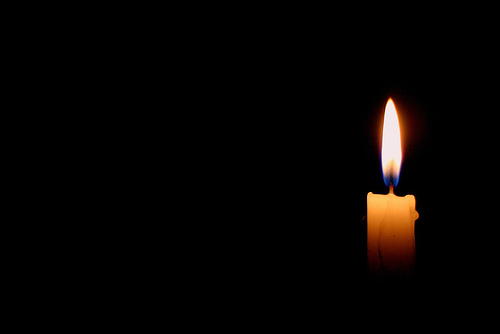
Shining Light in the Darkness


            As a child, I knew Christmas was just around the corner when my dad dragged out the ladder with an entangled mass of wire and bulbs, and nail by nail outlined our two story house with Christmas lights. Christmas lights are so beautiful whether hung outside on the edges of roofs or around a Christmas tree. In the darkest of nights, those lights provide comfort, serenity, and peace. More than ever, I’m looking forward to hanging up my Christmas lights this year. More than ever, I need a little more comfort, serenity, and peace.
            November has been a heart wrenching month for this country. It began with heightened political rhetoric, rancor, and divisiveness as we approached the election. Many were looking forward to after the election when this divisiveness would subside. Unfortunately, it only got worse. While I was saddened by the tone of the political campaigns and the ugliness of many supporters of both of these candidates, I’m absolutely heart-broken over the aftermath and response to the elections. That’s not a partisan statement. It’s not a comment on the result of the election itself. I am speaking to our response as a country to the election results and the darkness of hatred that has intensified in our land.
Many have used this election as perceived permission to act upon the hate they feel is justified, although the President-elect in a 60 Minutes interview told perpetrators to, “Stop it.” Between Wednesday, November 9, the day after the presidential election, and the morning of Monday, November 14, the Southern Poverty Law Center collected 437 reports of hateful intimidation and harassment. That’s just in 5 days. That’s just what was reported. The stories of hatred, racism, and xenophobia are horrendous. Swastikas painted in Jewish neighborhoods. “Trump Nation Whites Only” written on a banner outside an Episcopal church that held a Latino worship service. “Kill Blacks” scrawled on an elementary school wall. Trump supporters beaten by protestors. Elementary school kids chanting, “Build that wall” to their weeping Latino classmates. A friend of mine’s adopted daughter from Guatemala asking her mom if she was going to be deported because of comments made at school. The stories go on and on and on.
Lest I think I need not worry about this hatred invading Virginia Beach, a local pastor shared with me that a childcare worker stopped into the 7-11 a mile from the church I serve to pick up cold medicine the week after the elections. In the store, a man berated her with racist slurs and hate filled sentiments until he was finally escorted out of the store. She was understandably left shaken and scared. Virginia Beach is not exempt from the darkness of hatred permeating this country.
The Vision Statement at the church I serve says we are “Sent to Grow, Shine, and Love.” In the midst of the hatred, the darkness, the racism that has been unleashed in the public realm since the elections, will you shine Christ’s light? Will you choose to follow God's command to "do justice, love kindness, and walk humbly with our God?” As the prophet Amos proclaimed, our call is to "hate evil, love good, and establish justice at the city gate." Our neighbors are hurting, fearful, and uncertain. How do we love our neighbors as ourselves? As the poet and activist Alice Walker asked in the wake of the election, "Do we turn on others, or towards others?" I believe turning towards one another in love is the calling of our faith, the calling of Jesus.
          As I drag out the ladder with an entangled mass of wire and bulbs, and nail by nail outline my house this year, I look forward to a little more light in my neighborhood and a little less darkness. My prayer for this Advent season is to ask for guidance in how I can shine Christ’s light a little brighter, because darkness and light cannot coexist. How can I love a little more visibly? How can I reach out a little farther? How can I combat the hate with love? Martin Luther King Jr. said, “Darkness cannot drive out darkness: only light can do that. Hate cannot drive out hate: only love can do that.” May each of us drive out hate with love. May each of us drive out darkness by shining the light of Christ. And even more than seasonal Christmas lights, Christ’s light will bring lasting and much needed comfort, serenity, and peace.


Tuesday, January 5, 2016

The Work of Christmas

For many of us, Christmas is now long gone. Kids are back in school. Work has resumed. The routine has cranked back up. And we are now planning another year. But the Christmas season (the 12 days of Christmas) actually lasts until tomorrow, January 6, when we celebrate Epiphany. Epiphany reminds us about the wisemen who followed a star to worship the newborn King. But what happens after Epiphany? What lasting impact does Christmas have on us the rest of the year?

I am reminded of a wonderful poem by theologian Howard Thurman. This time of the year I lift up this poem as a way to celebrate and live Christmas the whole year through. May we each engage in the work of Christmas every day.


Thursday, December 10, 2015

Christmas Is About...

   
As I reflect on the meaning of Christmas for me, I recall these words from Matthew 1:22-25 “All this took place to fulfil what had been spoken by the Lord through the prophet: ‘Look, the virgin shall conceive and bear a son, and they shall name him Emmanuel’, which means, ‘God is with us.’ When Joseph awoke from sleep, he did as the angel of the Lord commanded him; he took her as his wife, but had no marital relations with her until she had borne a son; and he named him Jesus.” 
    What is Christmas all about? What is the significance of this whole season? As I reflected on these questions, I felt led to write this. 

Christmas Is About…
Christmas is about God breaking into human history in a way
never done before.
Christmas is about God doing a new thing in our midst.
Christmas is about Emmanuel, “God with us,”
Christmas is about love coming down to earth.
Christmas is about Jesus knocking on the door of our inn,
asking if there’s any room in our hearts.
Christmas is about interrupting our plans and our festivities
to marvel at a child born 2,000 years ago.
Christmas is about children who love to tell the birth story,
and sing carols, and lead God’s people in worship.
Christmas is about evening services, Christ’s body broken,
Christ’s light multiplied and carried out into the world.
Christmas is about you and me and God and love and faith
and hope and peace.
Christmas is today…and every day.

     If you answered the question, "What is Christmas truly about for you?" what would you write. Perhaps in some quiet or devotional time, you might start to ask that question for yourself. In the meantime, may you have a truly blessed and joy filled Christmas! Merry Christmas to each of you!

Wednesday, November 25, 2015

Giving Thanks in All Circumstances

    One thing I have always struggled with is knowing when to give thanks. At first that may sound silly. It's really not hard. I give thanks when life is good. I ask for help and prayers when life is hard. When something happens in my life that I like, I give thanks. When something happens that is unfortunate, I pray for what I need to get through it.
     But I Thessalonians 5:18 says, "give thanks in all circumstances; for this is the will of God in Christ Jesus for you." How in the world can we give thanks in ALL circumstances? I can't give thanks when a child gets sick, or violence is happening in the world, or a loved one is unemployed! I can't give thanks for all the wrong and evil and misfortune in this world! So how can I give thanks in ALL circumstances?!?
     Basing our thanks on whether or not something is what we want or we think is good at the time is very limiting and short sighted. One of my favorite stories about our limited nature of knowing what is ultimately beneficial for us is the ancient Eastern story below.
     “Once upon the time there was an old farmer who had worked his crops for many years. One day his horse ran away. Upon hearing the news, his neighbors came to visit. “Such bad luck,” they said sympathetically. “We’ll see,” the farmer replied.
     The next morning the horse returned, bringing with it three other wild horses. “How wonderful,” the neighbors exclaimed. “We’ll see,” replied the old man. The following day, his son tried to ride one of the untamed horses, was thrown, and broke his leg. The neighbors again came to offer their sympathy on his misfortune. “We’ll see,” answered the farmer.
     The day after, military officials came to the village to draft young men into the army. Seeing that the son’s leg was broken, they passed him by. The neighbors congratulated the farmer on how well things had turned out. “We’ll see,” said the farmer.”
     What should we consider a blessing? What do we call misfortune? An event that seems awful, like a horse running away, just might be blessing when it comes back with three more. That simple problem that led you to get the CAT scan may be the reason they caught that blood clot before it gave you a heart attack. Do we see the larger picture? How do we know what events will lead to positive or negative outcomes? Is what is going on in your life wonderful? Or awful? We’ll see.
     When we lose our health, we sure appreciate the little things we can do and we rejoice in what we used to take for granted. When we lose our material wealth, we learn that our security, our trust, our faith is not in money or possessions. When we fail or make a mistake, we learn from it, we grow, we change for the better. That which we might consider an unfortunate event, may just be a blessing. Maybe that’s why Thessalonians says to give thanks in all circumstances. Because you never know when a circumstance will become a blessing down the road.
     How do you know what to be thankful for? Are we only thankful for that which makes us happy at the moment? For what we want here and now? For what answers our prayers momentarily? What about the big picture? Only God knows. Only God knows what is to be praised, what is to be lamented. Only God has the wisdom to see all things, all times, all circumstances. We see only one step at a time. Only God sees the big picture.
     So when you are gathered around the Thanksgiving table tomorrow, some may have many obvious reasons to celebrate while others have many obvious reasons to lament. Cultivate an attitude and prayer life of thanksgiving. Giving thanks to a God that loves you unconditionally. Giving thanks to a God who gave his only Son that we might have abundant life. Giving thanks to a God who is always with us granting us undeserved forgiveness, grace, and mercy. Giving thanks to a God whose will is "peace on earth" and asks us to be involved in making it so. Giving thanks is not dependent on our circumstances. Thanks giving is dependent upon a loving, faithful, eternal God that desperately desires to be in an intimate relationship with us. And that's something to give thanks for no matter what we are going through. Happy Thanksgiving!

Sunday, June 21, 2015

Difficult Decisions: Thoughts about Coffee (but not really)

     Recently, the question has been asked at the church I serve, "Should we prohibit drinking coffee during worship?" As you might imagine there are people passionate on both sides  of this question and a vast majority somewhere in the middle. I've wrestled with the question, "What is my role in this discussion?" Some believe being a spiritual leader means guiding and influencing others to the answer s/he believes is best. Others believe a leader simply moderates the discussion with no bias. I've come to the conclusion, my role is to lay the ground work and provide a framework in which to have the discussion. As I gathered my thoughts on what to say tomorrow night at the Session meeting, I realized this framework is really applicable to any difficult decision we may face in the church or in our lives. I humbly offer them and welcome ways to improve this approach to making hard choices.
     First, as a Christian, I strive to follow in Jesus' footsteps and live into God's will for my life. My basis for a decision should not be self focused but God focused. "Not my will but thy will be done, O Lord." So I constantly ask, what is God's will? What does scripture say that might shed light on what God's will is? I may WANT to cheat on a test in high school so I can get a better grade and get into a better college, but I know that's not what God would want me to do nor is it what scripture condones. True, many times it's hard to know what God's will is. But at least asking the question and consulting scripture puts us on the right path.
     Second, what is at stake here? What are the deeper issues? Back to the coffee example. The real issue isn't coffee. The deeper issue is stewardship of property as we take good care of the pews, carpets, and sanctuary entrusted to us. The deeper issue is hospitality in how we make members and visitors feel welcome in worship. The deeper issue is worship and respect and reverence for an Almighty God. In every mundane decision, there are deeper issues of ethics, morals, trust, and integrity. I alway ask myself, "What issues does this question really speak to and what is at stake in this decision?"
     Third, there is a cost and  benefit to any decision we make. What is the cost and benefit to saying yes to the idea? What is the cost and benefit to saying no? What is the cost and benefit to an alternative? Let's be honest. Everything has an upside and downside. We may simply prefer different costs and benefits, but no one answer will be perfect. That' why the decision is difficult in the first place. 
     Fourth, I always wonder and ask, "Is there an alternative?" Does it have to be all yes or no to a certain issue or question? Is there a compromise? In the past the compromise to the coffee issue has been to ask people to put lids on drinks to reduce the possibility of spills and damage. Sometimes there is no compromise but I continue to seek creative solutions or alternatives to issues that may cause disagreement. 
     Fifth, I also ask myself, "Do we need more information to make a decision? Do we have to make it now? Is there a benefit in waiting? Do we need to see how others have handled a similar question? Who else will be effected by this decision? Who could I talk to for wisdom or advice? These are also important questions to ask ourselves as we take time to consider the impact our decisions make on not just our own lives but the lives of others.
     Of course this is not a fool proof, step by step, easy to follow instruction manual for how to make difficult decisions. But it may perhaps shed some light on a few ways to approach hard choices we are faced with and some helpful questions we might ask ourselves. Don't underestimate prayer and the guidance of the Holy Spirit. With God all things are possible. Study, ask, reflect, be honest, seek God's will, and pray. More times than not, the path will become clear.